Restroom trailers present numerous eco-friendly advantages over traditional restroom options, making them a favored choice for environmentally conscious event organizers. One of the primary benefits is the conservation of water resources. Restroom trailers are designed with modern water-saving fixtures that drastically reduce water usage compared to conventional plumbing systems. This efficient water management aligns with sustainable practices, reducing the overall environmental footprint of any event.Furthermore, restroom trailers contribute positively to waste management. The contained waste systems not only ensure that human waste is disposed of safely and effectively, but they also allow for waste to be processed by specialized facilities. This promotes recycling and other waste-to-energy initiatives, reducing the burden on local sewage systems and landfill sites. Additionally, restroom trailers can be equipped with biodegradable and environmentally friendly cleaning products, maintaining sanitation without harming the ecosystem.The mobility of restroom trailers also lessens environmental impact by minimizing the need for permanent structures that require extensive infrastructure development. This means less disruption to natural landscapes, a vital consideration for outdoor events held in environmentally sensitive areas. Restroom trailers offer a versatile solution that can adapt to varying terrains without the requirement for permanent alterations to the environment.Another critical aspect is the reduction of energy use. Modern restroom trailers often incorporate energy-efficient lighting and climate control systems. Solar-powered options further enhance their green credentials, tapping into renewable energy sources to ensure comfort while minimizing carbon emissions. This holistic approach to energy use makes restroom trailers an integral part of an eco-friendly event strategy.Finally, the versatility of restroom trailers supports the principles of sustainability through logistical efficiency. Their ability to be easily transported and set up reduces the carbon footprint associated with long-distance travel and lengthy installation procedures. This not only cuts down on fuel use but also ensures that facilities are available where they're most needed, fostering an eco-conscious approach to event planning.

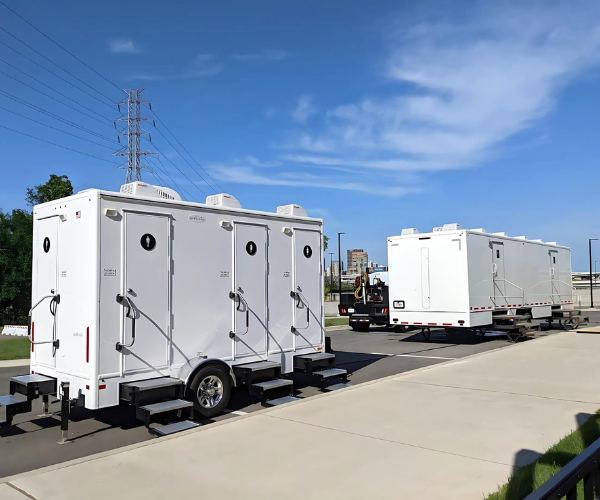
Restroom Trailer Rentals in Davidson County, North Carolina
Call today for a free quote (336) 980-2028
Restroom Trailer
Fast, Easy, & 100% Free To Get Started
Over 30 Years of Experience
With more than 30 years of experience, our company stands firmly within the community, dedicated to quality service. Proudly serving Davidson County, we deliver reliable solutions with a personal touch, ensuring customer satisfaction at every opportunity.
Top-Quality Restroom Trailers
Our company stands out for its commitment to offering top-quality restroom trailers. Each unit is designed to deliver a premium experience, guaranteeing comfort and hygiene for every occasion.
Prompt Delivery Services
We take pride in promptly delivering Restroom Trailers, ensuring your event is well-prepared on time. Our efficient service guarantees these trailers are set up and ready just when you need them most, reducing stress and enhancing convenience.
Premium Restroom Trailer Service in Davidson County
Call for a Free Quote Today
(336) 980-2028
At the heart of Davidson County, our Restroom Trailer company exemplifies excellence through its steadfast dedication. Renowned for its dependable, reliable, and locally owned service, we extend our reach beyond the main location to nearby areas. We accommodate diverse occasions such as construction sites, parties, festivals, and weddings. Our professional team meticulously maintains each unit, ensuring a pristine experience for all guests. Whether organizing a small gathering or a large event, our restroom trailers provide unmatched convenience and comfort. Rely on our years of expertise and local ownership for quality sanitation solutions tailored to your needs.
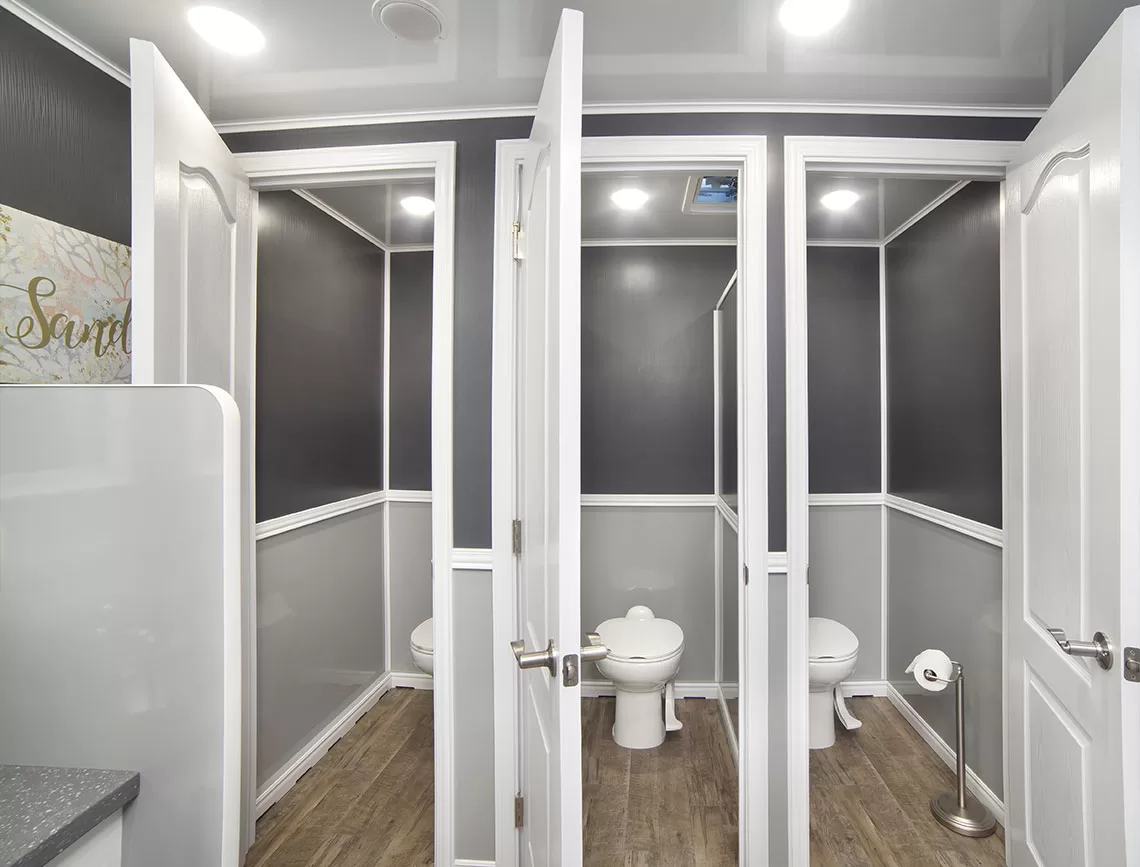
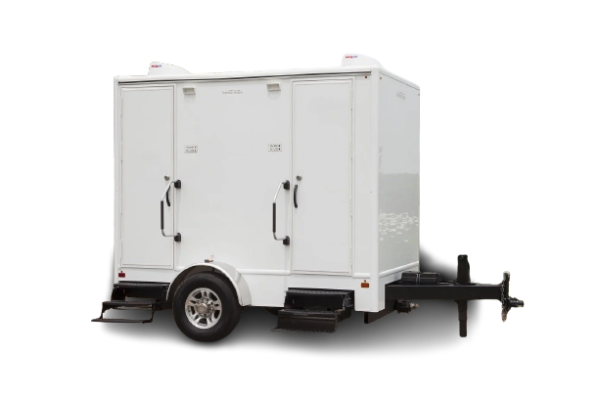
A compact, stylish solution featuring separate entrances for men and women.Each private suite includes flushing toilets, sinks with running water, interior lighting, and climate control for comfort at any event or worksite. (We offer variants 2–10 stalls.)
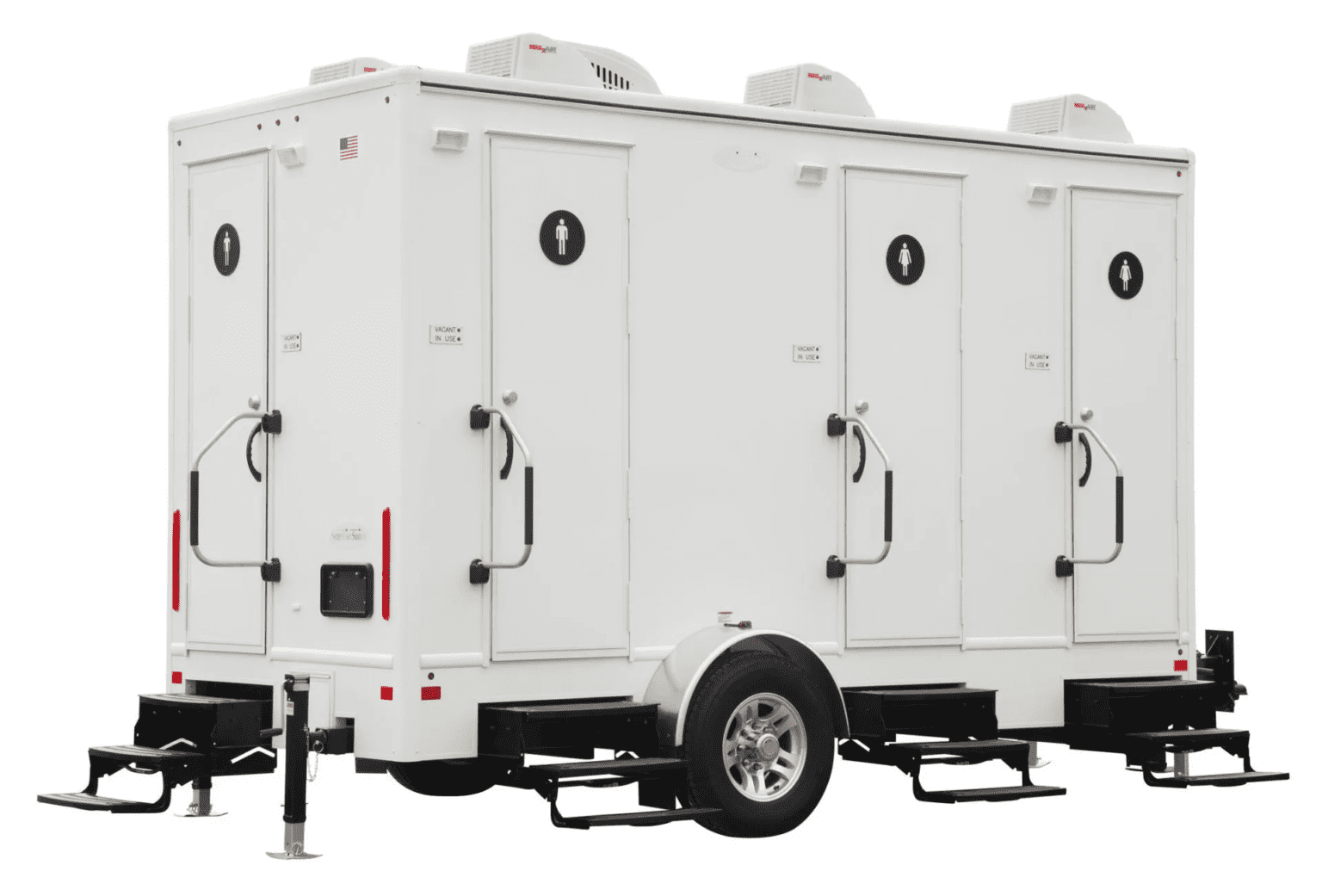
Designed for higher guest capacity, this unit offers four private, individual restrooms with flushing toilets, sinks with running water, interior lighting, and climate control. Ideal for weddings, festivals, and busy job sites.(We offer variants 2–10 stalls.)
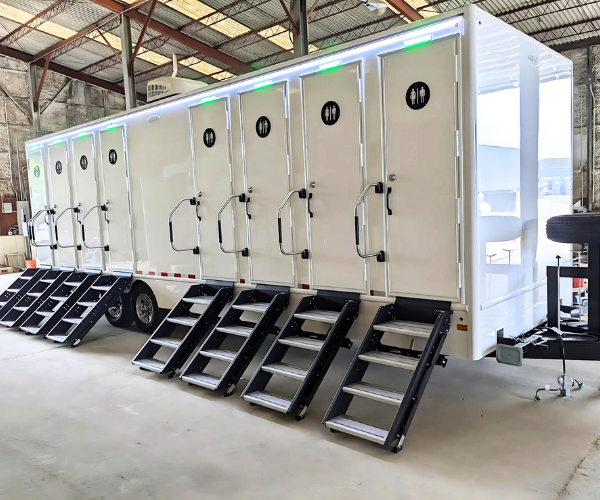
Perfect for large events and high-traffic sites, this spacious trailer provides eight private stalls, each with a flushing toilet, sink with running water, interior lighting, and climate control. A reliable, upscale solution for maximum convenience and comfort.(We offer variants 2–10 stalls.)
We Proudly Serve
Standard Portable Toilets
Our standard portable toilets provide clean and reliable sanitation solutions for diverse needs across North Carolina.
High Rise Portable Toilets
High-rise portable toilets in Davidson County offer convenient and accessible solutions for skyscraper construction sites.
Restroom Trailers
'A Sani-Can' provides clean, luxury restroom trailers across Davidson County to elevate any event or venue.
Roll off Dumpsters
'A Sani-Can' offers roll-off dumpsters in Davidson County for efficient and convenient waste management solutions.
Septic Tank Cleaning
We provide comprehensive septic tank cleaning services across North Carolina, maintaining hygiene and prolonging system longevity.
Grease Trap Cleaning
In Davidson County, we offer expert grease trap cleaning to enhance safety and efficiency for restaurants and commercial kitchens.
Fencing & Barricades
Our fencing and barricades service provides secure and reliable solutions for site perimeters across North Carolina.
Residential Storage
Our residential storage solutions in Davidson County, North Carolina, offer secure and accessible options for all your needs.
Davidson County Restroom Trailer Rentals and More
Our company makes getting a quote for restroom trailer rentals in Davidson County easy and straightforward. With just a few clicks, you can access our online form available at the top and bottom of our webpage, or simply use our Get A Quote buttons dispersed throughout. We require basic details like your first name, last name, phone number, and email to start the process.Once we receive your inquiry, our team promptly prepares a comprehensive quote that covers all necessary details including rental costs, delivery, and setup charges. This streamlined approach ensures that you are fully informed and can make a swift decision to fit your event planning needs without unnecessary delays.Our efficient delivery service further adds to the convenience, as we coordinate directly with you to set up our top-quality restroom trailers at your desired location. Whether you are hosting a wedding, festival, or corporate event, you can rely on us for timely delivery and professional setup and removal. This ensures that every aspect of your sanitation needs is taken care of efficiently, leaving you with one less detail to worry about.Discover the ease and simplicity of working with a company that prioritizes customer satisfaction and delivers reliable, clean restroom trailers that contribute to the success of your events. Our commitment to convenience and quality sets us apart as the trusted provider of portable sanitation solutions in Davidson County.

Davidson County boasts an array of picturesque landscapes and vibrant community events, making it essential to have restroom trailers that match the local charm. Our Restroom Trailer service stands out by offering reliable and clean facilities that elevate any occasion. From beautiful parks to bustling areas near the annual Lexington Barbecue Festival, our trailers ensure comfort and convenience, allowing guests to focus on the moment. Whether it's a small gathering in the heart of the county or a large festival celebrating local heritage, our restroom trailers are designed to accommodate any scale of event. Featuring modern amenities, they provide a touch of luxury, ensuring guests have access to top-notch sanitation facilities. This dedication to quality underscores our mission to offer the best portable restroom solutions in the region. With proximity to lush outdoor attractions and lively gatherings at Boone's Cave Park, our trailers enhance the experience by seamlessly integrating into the surrounding environment. Enjoy the peace of mind that comes with knowing your event logistics are in capable hands, allowing attendees to relish the rich cultural and natural beauty Davidson County has to offer. Rely on us to provide a service that is not only practical but also enhances the guest experience through thoughtful design and impeccable service standards.
Choosing us as your restroom trailer provider in Davidson County ensures exceptional value and trust. Our in-depth experience in the area equips us with a keen understanding of local needs and expectations, allowing us to deliver unparalleled service. Whether for a community event or a formal gathering, our trailers offer the perfect combination of functionality and comfort.Our commitment to the community surpasses basic service. We strive to enhance each event by supplying facilities that are clean, reliable, and visually appealing. This approach not only fosters a welcoming atmosphere but also meets logistical needs without compromise.We excel in flexibility and adaptability, customizing our services to match the specific requirements of each event. As Davidson County's preferred choice, our trailers integrate seamlessly into any setting, from historic sites to modern venues. Trust us to provide a service that embodies the quality and charm of the local community.
Experience fast and reliable Restroom Trailer services with us in Davidson County. Our approach is centered on delivering exceptional convenience through prompt and efficient service. From the moment you request a quote to the final setup, our team ensures a smooth process.Our trailers are dispatched with precision, arriving on schedule at the designated location. This reliability stems from our commitment to excellence and the well-orchestrated logistics that underpin our operations. Rest assured, we prioritize your needs and dedicate ourselves to providing timely sanitation solutions that enhance every event.Embrace the advantage of working with a company that values punctuality, allowing you to focus on other aspects of your event planning. With us, you gain a partner who understands the importance of seamless execution and customer satisfaction.
Davidson County: Discover Our Restroom Trailer
Renting a restroom trailer in Davidson County is a straightforward and user-friendly process designed to accommodate all event organizers. Starting on our website, you'll find forms conveniently located at both the top and bottom of the page, as well as various Get A Quote buttons throughout. Filling out the form is quick, asking only for your first name, last name, phone number, and email to initiate the process.Once your information is submitted, our dedicated team promptly reviews your request to ensure a fast response. We reach out with a detailed quote that outlines all necessary information, from rental fees to delivery and setup specifics. This transparent approach allows you to understand all aspects of the rental agreement beforehand, eliminating potential surprises.Our commitment to client satisfaction means we're available to answer any questions or address concerns, providing peace of mind as you plan your event. Upon agreement, we coordinate delivery details, ensuring the restroom trailer arrives at your venue efficiently and is ready for immediate use.The ease of renting from us is further enhanced by our exemplary customer service, where we guide you through every step of the process. Our focus on making rentals accessible and stress-free underlines our dedication to providing outstanding service. We value your time, and our streamlined system reflects that commitment by prioritizing convenience without compromising on quality.Rest assured, our restroom trailers are designed to cater to a wide range of events, whether it's a formal wedding, corporate function, or casual outdoor gathering. Trust us for a seamless rental experience that enhances the comfort and enjoyment of your guests while offering you simplicity and efficiency.
The delivery timeframe for a restroom trailer order is a pivotal component of our service, crafted to guarantee efficiency and reliability. Typically, the process from booking to delivery ranges within a few days, depending on your event's specific requirements and our availability. Once you submit a request for a trailer rental, we promptly assess the logistics to accommodate your timeline.Our team is dedicated to a responsive approach, ensuring an expedited process that takes into account your event's unique schedule. By prioritizing timely communication, we're able to provide you with accurate delivery estimates as soon as we confirm availability. You can depend on our experienced staff to work closely with you, curating a plan that seamlessly fits your event's agenda.In many cases, our prompt service allows restroom trailers to arrive on-site well ahead of your event's kick-off, granting peace of mind that your sanitation facilities are set up and operational without delay. This foresight in planning ensures that even unforeseen changes can be accommodated gracefully.For urgent requests or last-minute event adjustments, our team remains flexible, offering solutions where possible to meet the pressing needs of our clients. Our commitment to adapting swiftly is a testament to the quality service we offer across Davidson County and surrounding areas.By delivering on promises and setting realistic timeframes, we aim to minimize the stress associated with event planning logistics. Our objective is to provide an uncomplicated rental experience, where you can focus on orchestrating a memorable event, assured that your restroom facilities will be available and functional on time.
Yes, we are fully equipped to service a diverse array of events and construction services with our extensive range of offerings. From vibrant festivals and exciting sporting events to elegant weddings and corporate functions, our versatile product line is tailored to meet the unique demands of each occasion. Our inventory includes luxury restroom trailers, standard porta potties, ADA-compliant units, and sophisticated portable sinks, providing comprehensive coverage for any scenario.Construction sites also benefit from our reliable services, as we supply essential roll-off dumpsters, holding tanks, and fencing solutions—all crafted to streamline site operations and maintain safety standards. Our ability to respond to varied requests with finesse ensures that even the most complex logistics can be managed adeptly.Our meticulous attention to detail is reflected in our customizable options, which allow us to align our services with your specific requirements. Whether accommodating high guest volumes, adhering to accessibility needs, or enhancing the event's atmosphere, we deliver with precision and professionalism.The commitment to exceptional service is evidenced in our proactive strategies and team readiness, ensuring our clients receive superior sanitation and logistic support that elevates the overall experience. Rest assured, regardless of the event type or construction scale, we're prepared to exceed expectations.Trust us to handle the finer points of your event or project as our thoughtfully curated solutions promote convenience and satisfaction. Join many satisfied customers in experiencing unmatched responsiveness and quality, hallmarks of our service ethos.